
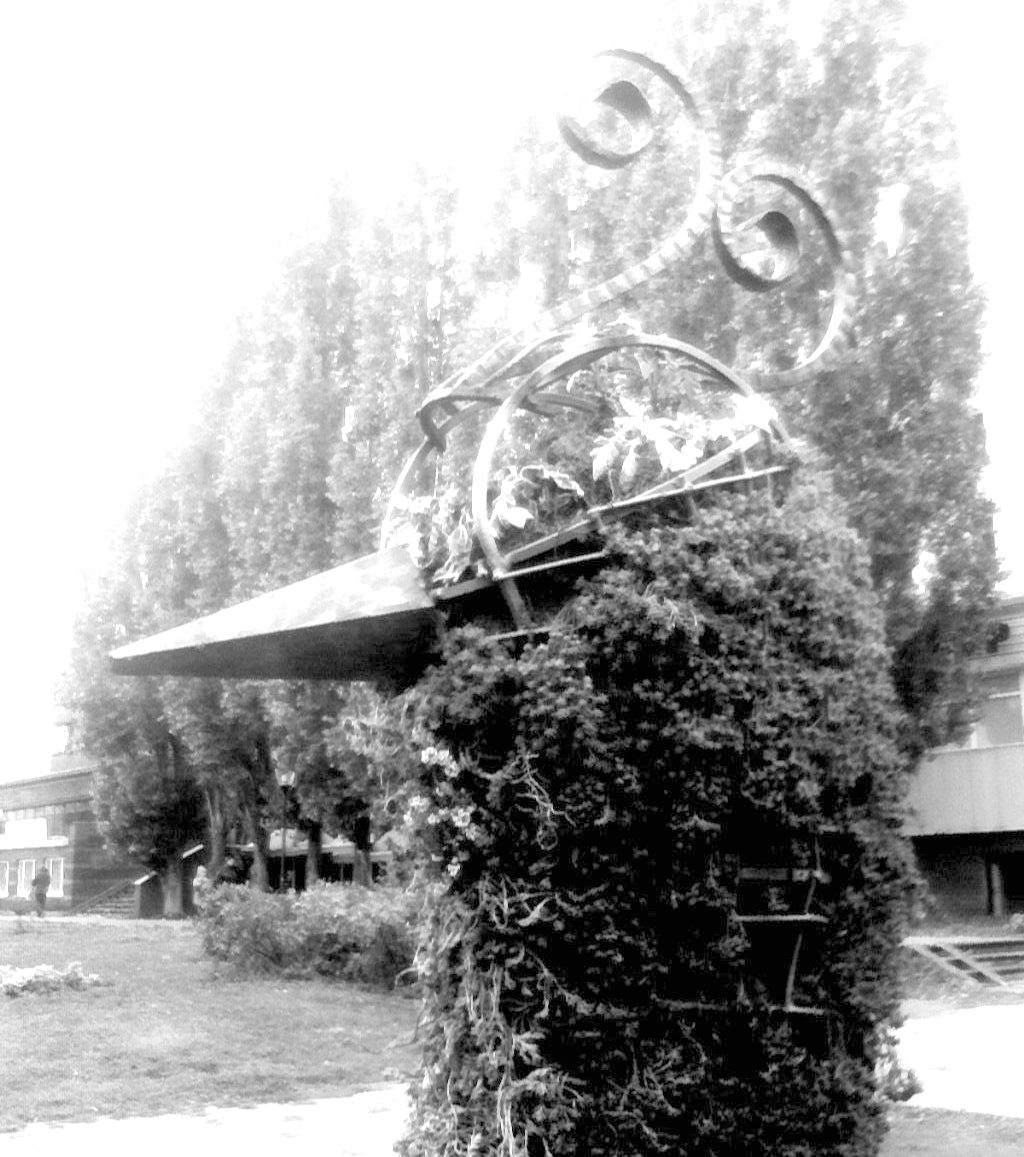
Nizhny Novgorod Woodpecker — a prolific and hardworking Mordvin, a mythical proto-Nizhny Novgorod resident who became famous as a landowner Historic Center, who ceded his ancestral estates to the Muscovites who founded the Gorod.
A Modern Legend About the Woodpecker
A detailed account of the woodpecker can be found at the official anniversary website “Nizhny Novgorod: 785 Years”, the central part of whose homepage is devoted to a story about the Founding of Nizhny Novgorod and the origin of the name “Dyatlov Hills”:
- "Nizhny Novgorod stands on the high, wooded hills of the Volga and Oka rivers, which have inspired so many songs."
It would be interesting to hear at least one or two. But let's move on to the main storyline about the hardworking "Woodpecker":
- “The founder of Nizhny Novgorod was a Mordvin pagan. He had eighteen wives and seventy sons—so he had to build hut after hut for them, hammering away tirelessly with his axe from morning till night... Those who sailed past nicknamed him ‘Woodpecker’... Woodpecker’s sons had no time to wonder what kind of prince he was, but since he was asking for gifts, they obliged... They sent their teenage boys ashore with the gifts. On the way, the boys drank so much from the jug that they had to refill it with spring water...”
From the text above, it is clear that the indigenous man Dyatel is portrayed as both active (he has many children and works all the time) and, at the same time, unintelligent (his children do not help with construction and are uneducated).
It's no surprise that the term "woodpeckers" is usually used to describe people who work a lot but achieve little for themselves.
A parallel storyline depicts Muscovites—the shrewd new owners of the local lands:
- “...One day, the two older Dyatlov sons got into an argument, and a fight broke out. At that time, a boat was sailing down the Volga Yuri Vsevolodovich...he noticed a flurry of activity in the mountains. He asked the all-knowing voivode what was happening there. The voivode, of course, diplomatically explained that the Mordva was welcoming the Russian prince and asking him to accept their gifts. Yuri Vsevolodovich then sent an envoy to the settlement of Dyatlovo... The men drank so much from the jug along the way that it had to be refilled with spring water. The prince was about to get angry, but the voivode didn’t miss a beat: “There can be no greater gift: for the Mordva bestow their land and water upon the illustrious prince,” he said. The prince sailed on: wherever he threw a handful of earth onto the shore, Gorod would stand; wherever he threw a pinch, a village would be. "According to legend, Nizhny Novgorod soon sprang up in the Dyatlov Hills."
Two influences clash here—the local one, from Dyatlovo, and the one from Moscow. Moreover, the local influence is not represented very well (they lost valuable land through their own foolishness, despite the dense population), while the Moscow influence is portrayed as the indisputable source of law (since the prince, with the help of his “manager,” interpreted the situation as the locals having gifted him the land, and this immediately took on the force of a contract). Moreover, this law is based on force, since the sole—and again unquestioned—source of legitimacy for such a law is the potential “wrath of Prince” Yuri Vsevolodovich. At the same time, the legend makes no secret of the fact that the method by which the Muscovites acquired land was through deception and fraud.
To be fair, it should be noted that the image of the woodpecker—the forest’s sanitation worker—stripped of mythical rhetoric and its inherent anthropomorphism, is quite positive, at least when compared to its counterpart, the prototype of the Moscow place name “Vorobyovy Gory.”
The Classic Legend of the Woodpecker
Ceremonial and Patriotic Version
The legend was discovered by P. I. Melnikov in one of the 17th-century manuscript collections and published in the *Nizhny Novgorod Provincial Gazette* in 1845 and 1847.
“Nizhny Novgorod arose on the site of a vast, dense forest. The high hills along the right bank of the Oka River, cut through by deep ravines, were called the Dyatlov Hills. And they say that’s where the name came from...”
In ancient times, a Mordvin named Skvorets lived in that place; he was a friend and assistant to the bandit Solovey, who was defeated and bound by Ilya Muromets.
There he married eighteen wives, and Skvorts had seventy sons. They all lived together, raised livestock, grazed their herds in the mountains, and in the evenings drove them through the ravines to the Oka River for a drink. Right there, in the mountain gorge, lived the sorcerer Woodpecker, who had once been on good terms with the robber Nightingale.
One day, the Starling went to the Woodpecker and asked him about the future of his children. And the Woodpecker replied:
— If your children live in peace and harmony with one another, they will rule these lands for a long time; but if they quarrel, they will be conquered by the Russians, who will build a stone fortress at the mouth of the Oka—a fortress that is very strong, very strong, and no enemy forces will be able to overcome it...
They talked about it for a long time.
Toward the end of their conversation, the Woodpecker asked the Starling to give him a proper burial.
He had promised. Time went by.
The sorcerer Dyatol died, and Skvorets buried him on a mountain at the mouth of the Oka River. That place came to be known as “Dyatlov Hills.” Skvorets died soon after him.
Before his death, he bequeathed to his children mutual harmony and unity, but their descendants, having fallen out, began to feud among themselves, and then Andrei Bogolyubsky expelled them from the mouth of the Oka River, and his nephew, Yuri Vsevolodovich, having built Nov-Grad Nizhny there, fulfilled the Woodpecker’s prophecy.”
(The Complete Works of P. I. Melnikov-Pechersky, Second Edition, Volume 7. St. Petersburg, 1909, p. 414.)
Source text
"In ancient times, in the mountains where Nizhny Novgorod now stands, there lived a Mordvin named Skvorets, an assistant to Solovey the Bandit, who had been defeated by Ilya Muromets. Skvorets had seventy sons by his eighteen wives. They all lived peacefully, raising livestock; together they grazed their herds on the mountain, and in the evenings they led them to the Oka River to drink. Here in the mountains lived the sorcerer Dyatel, also one of Solovey’s friends. One day, Skvorets asked him to predict the fate of his children. Dyatel replied that if they lived peacefully and supported one another, they would rule these lands for a long time; but as soon as quarrels arose among their descendants, the Russians would seize their lands, drive them from their ancestral homes, and build at the mouth of the Oka “a city of stone, very strong, which enemy forces will not be able to overcome.”In conclusion, as a reward for his prophecy, Dyatel asked Skvorts for a proper burial. The old sorcerer died, and Skvorts buried him at the site where the Blagoveshchensky Monastery now stands, and that place came to be known as Dyatlov Hills".
The starling, who had bequeathed to his children a promise to remain in harmony forever, also died. But soon after his death, strife broke out among his descendants. Saint Prince Andrei Bogolyubsky took advantage of this. He drove the Mordva away from Arrow, and his nephew, Prince Yuri, built on the site of the settlement Mordva Nizhny Novgorod.
The Woodpecker's prophecy came true—it appeared on Dyatlov Hills A stronghold, indomitable and fearsome to its enemies. So the legend goes.
(Khramtsevsky. A Brief History and Description of Nizhny Novgorod. 1857. Vol. 1.)
A Modern Mordovian Legend
According to some Mordva For patriots, the Nizhny Novgorod Woodpecker is Erzyan Mastor Robin Hood: He was a forest outlaw who resented the colonization of his homeland, particularly the seizure of Osh Was Chosen. Despite the small size of his band, Dyatel harassed the Vladimirskoye-Suzdal trading post using guerrilla tactics, mainly attacking trade caravans and destroying (“smashing”) the buildings of the prince’s men during raids on forest outposts. According to this legend, Dyatel used the surplus of the plundered riches for the needs of the Mordovian Resistance, sending them to the “Great Land”: to Erzyan Mastor.
Criticism of Dyatl's Existence
Some of the works that explain the origin of the name of the mountains on which Nizhny Novgorod is located make no mention of the Mordvin pioneer.
Thus, A.S. Gatsisky writes: "...of course, the most likely explanation is the theory that this name derives from the many woodpeckers that once inhabited the dark forests covering the upland banks of the Oka River—traces of which are still visible today in the copse stretching far along the river’s right bank, called ‘Sluda". *A Nizhny Novgorod Woman* by A.S. Gatsiskiy. Expanded and revised edition. Nizhny Novgorod, 1877.