
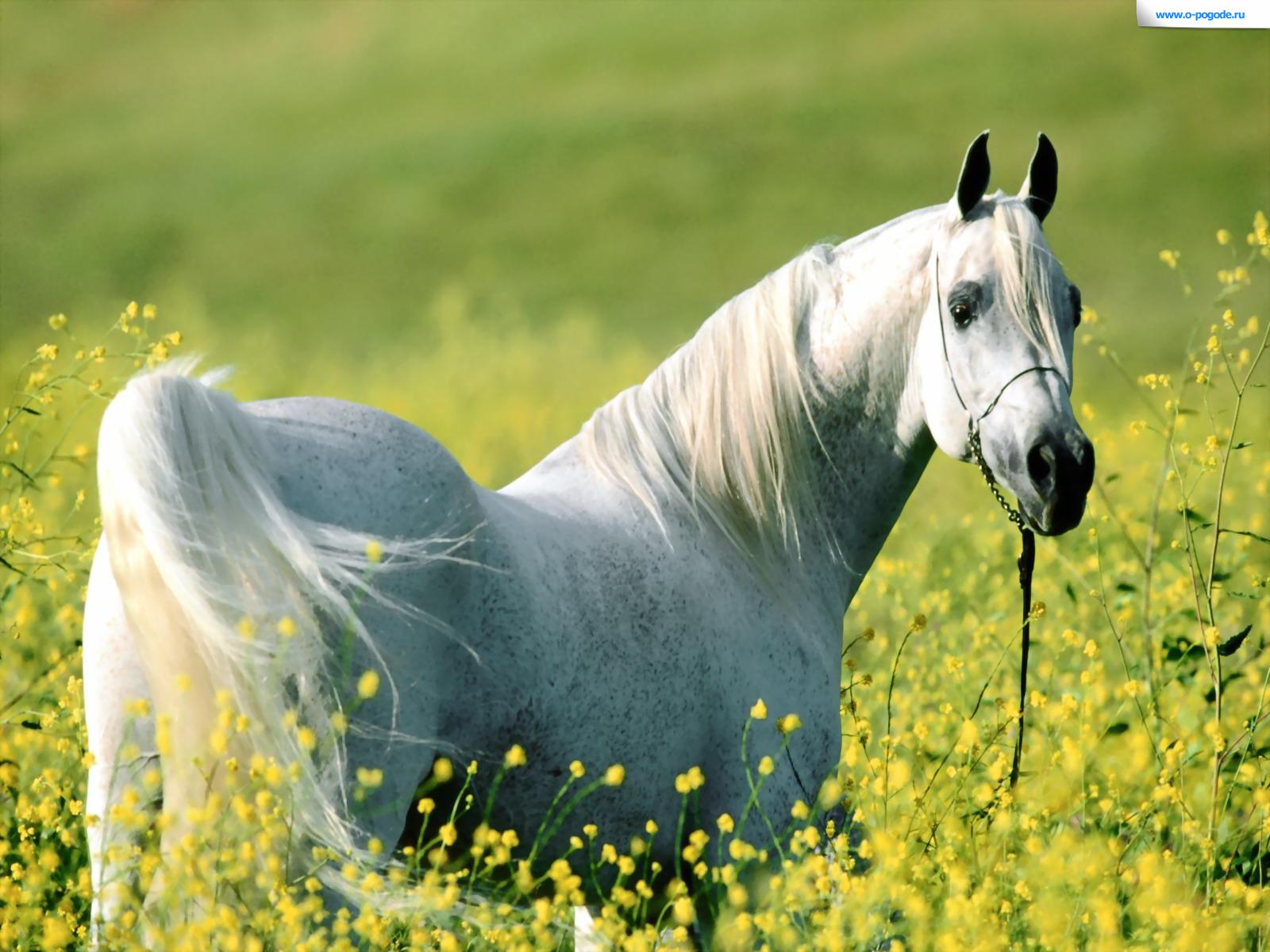
Horse riding, professional and amateur equestrianism, and keeping a personal horse — a growing hobby in the Nizhny Novgorod Region.
Why
The benefits of horse riding for the human body have been known since ancient times.
Modern research has shown that riding a horse is excellent for strengthening the body as a whole, and has a beneficial effect on the musculoskeletal system, the nervous system, and the circulatory system.
Seat
Your instructor will assess whether your seat is correct.
The inner surface of the rider's leg from the knee to the ankle is called the leg aid (shenkel) and serves as one of the primary means of controlling the horse. The leg aid must always remain at the horse's side, behind the girth.
Balance in the saddle is maintained by the inner part of the leg from the knee upward, known as the grip (shlyus). The grip must never leave the saddle. There is one more thing to remember straight away: sitting in a correct seat is comfortable! The shoulders should be slightly lowered and turned out completely freely, without strong muscular tension, which after half an hour of riding will simply turn into cramping; the slight arch of the lower back should remain free and natural; there is no need to "cling" to the horse with your legs — from your very first lesson, remember that you stay on a horse through balance, not muscular effort. Even if at first you want to hunch over, drop your shoulders, relax your lower back — it is simply a matter of lacking the habit; if you do so, it will be no more comfortable for you or for the horse. With a correct seat, the rider's center of gravity is on the same vertical line as the horse's center of gravity, and only this position allows the horse to move lightly and in a balanced way under the rider, while allowing you to perceive all its movements clearly and respond to them correctly.
Rise in the stirrups a few times. Check that no piece of equipment is rubbing or pressing, even slightly: at first it may seem like "only a little," but even in half an hour of riding you risk rubbing your leg raw. Now take up the reins. There are two ways to hold the reins: in one hand or in two hands, but you will learn to manage the horse with one hand later. Holding the reins in two hands looks like this: the rein should pass between the little finger and the ring finger, and between the index finger and the thumb. That is, three fingers are on top of the rein, and two — the thumb and the little finger — are below the rein. The tension of the rein should be such that you feel a light resistance, which will allow you not to miss any movement of the horse's head.
The hands, bent at the elbows, should remain almost still; control is achieved through finger movements or, as a last resort, wrist movements. Do not overtighten the rein or grip it for support: it is a means of control, not an additional prop for the rider. Since a beginning rider generally cannot easily maintain balance in the saddle without some help from the hands, you may hold onto the mane. The rein is taken at such a distance from the snaffle rings that, when the horse's head is in a calm position, you feel a light resistance, thus maintaining the necessary contact with its mouth.
The moment a horse understands that a beginner is on its back, it immediately loses any desire to work. Even if you just watched that very same horse willingly and obediently trotting and cantering under another rider, taking jumps and responding to commands that were barely visible from the outside — rest assured: that horse will not obey you in the same way. You will still have to prove your authority to it. So if the horse did not move when you squeezed its sides with your leg aids, instead of a smooth squeeze give a sharp, strong nudge or even a series of nudges with your legs, accompanying them with an energetic movement of your lower back — as if "pushing" the horse out from under you. Do not be afraid to push the horse with your legs as hard as you can: you will not be able to cause it pain in this way.
You must be considerably more careful with your hands: a sudden jerk or simply an overly tight rein can cause the horse real discomfort. Do not try to pull the reins harder in an attempt to get the horse moving: the most you will achieve is that it throws its head back and starts backing up.
If the lesson is taking place in a group, your problems in this regard will end once all riders have arranged their horses in a ride — one behind another, at a distance of two horse lengths (when, looking between your horse's ears, you can see the hooves of the horse ahead) or one horse length (when you can see the hock of the horse ahead). The distance, as well as each horse's place in the ride, is determined by the instructor, and his instructions must not be violated. This distance is dictated by safety considerations.
If you are having an individual lesson with the instructor and difficulties with controlling the horse arise during the first lesson, the instructor may put it on a lunge line. A lunge line is a sturdy "lead" 8–10 metres long. When working on the lunge, you should not drop the reins and disengage entirely from controlling the horse, but the main focus should be on developing a correct seat.
23. When riding in a group, do not ride up onto the horse ahead of you and do not approach another horse from the side. At the same time, try not to fall too far behind — a horse, guided by herd instinct, may suddenly dash to catch up with the others.
24. Do not stop in the path of moving horses and do not ride against the direction of travel. To avoid collisions with other riders, pass them on the left shoulder.
25. Control your horse calmly and gently; do not jerk the reins.
26. To prevent unwanted behaviour from your horse when it sees or is approached by a tractor, a dog, a large unfamiliar object, or hears unusual sounds, shorten the rein, calm the horse with your voice, and distract it with some request.
27. If the horse bolts, lean back and energetically take up the rein, alternating hands. Then bring it to a halt by circling (on a volte), gradually reducing the radius.
28. If the horse rears — yield the rein, grab the mane or wrap your arms around the horse's neck, and use an active driving aid to bring it down. Do not lean back or pull the rein toward yourself — the horse may fall over backwards.
29. If the horse stops and paws the ground with a front leg, lowers its head, and sniffs the ground, immediately raise its head and energetically drive it forward — the horse is about to lie down under the rider.
30. If you fall, throw off the stirrups and try, without releasing the rein, to move away from the horse and not get up immediately (so the horse does not kick you). After a fall, do not chase after the horse.
31. Before dismounting, remove both stirrups. Dismount by swinging your right leg over the horse's croup.
32. When dismounting, do not leave the horse unattended. Do not tie a horse by the rein — with a bridle on — to fence bars, jump standards, arena railings, or similar fixtures.
33. Do not ride into the stable on horseback; lead the horse in by the rein.
34. When unsaddling, first remove the saddle, then the bridle, and be sure to remove any bandages (if the horse was bandaged).
35. Before leaving the stall, stroke the horse and give it a treat of carrot, sliced apple, a crouton, or sugar. Offer the treat on an open palm.
Features of cross-country riding
Riding in the forest or in a field is far more interesting than in an arena or enclosed paddock, but such riding demands sufficient experience from the rider, a confident seat, the ability to control the horse well, and the capacity to orient quickly in any situation. Remember: a forest or field is not a paddock — anything can happen. Around a bend in the path there may be a fallen tree or some other unforeseen obstacle; the horse may be startled by a bird flushing from the bushes; and finally, a person may unexpectedly step out onto the path ahead of you! You must be prepared for all of this. Wait to venture into the forest until you feel completely confident and at ease in the saddle.
In the field you will find yourself recalling many exercises that seemed unnecessary at the very start of your lessons. Do not worry that the horse might stumble if it looks away from the path: its field of vision is far wider than a human's, and so it can see the path perfectly well even if it turns its head slightly. However, you should pay close attention to how, where, and how far the horse turns its head: this will help you anticipate its intentions in advance and prevent possible consequences in time.
1. As a rule, a horse behaves more nervously in the field; consequently, the rider must be very attentive, must under no circumstances overtake the horse ahead, and must not move outside the ride.
2. If your horse tries to break out of the ride, try to direct it behind the horse ahead; if this does not work and the horse has broken away to overtake the ride — try to move away from the ride by 5–10 metres and bring the horse back to the rear.
3. In the forest and in the field it is not recommended to ride at a sitting trot (without posting) or at a collected canter (sitting in the saddle).
4. Lean forward and to the side of the horse's neck to avoid branches.
5. Do not let the rein go slack: if the horse stumbles, try not to fall forward — support it with the rein.
6. When riding between trees, protect your knees.
7. If you feel you are about to fall, hold onto the mane and loudly ask the instructor to halt the ride. Ask for your request to be passed along the line.
Riders who are under the influence of alcohol or any other intoxicating substance will not be permitted to ride.
Safety
A horse is a powerful, intelligent, and affectionate animal, yet by nature very easily frightened. Startled by a sudden noise, a sharp movement, or an unfamiliar object, it may lunge forward or sideways, or rear up.
Some horses may kick or bite.
If a horse is handled incorrectly, or if safety rules are ignored or violated, your life and health may be put at risk. To avoid injury, observe the following rules.
General principles
When near an unfamiliar horse, the following are not recommended:
- Making noise
- Smoking
- Making sudden movements with your hands
- Using a camera flash
- Entering stalls without permission from stable staff
Safety rules when working with a horse
1. Follow all instructions and commands from your instructor strictly.
2. Always treat the horse calmly and gently.
3. Do not run in the stable; do not make noise.
4. Do not put your hands through the stall bars toward the horse. The horse may grab your fingers with its teeth.
5. Approach the horse by calling to it first from the side it is facing.
6. Do not approach a horse from behind. The horse may kick.
7. When saddling, first place the rein over the horse's neck, then put on the bridle, and then saddle up.
8. If the horse does not want to take the snaffle bit and clamps its teeth shut, press your fingers against the toothless part of the mouth and offer the bit as soon as it opens its teeth.
9. Put on the bridle carefully — a horse's ears are sensitive.
10. Do not release the rein from the moment you lead the horse out of the stall until it is unsaddled.
11. Do not lead your horse out of the stall if the previous group has not yet returned their horses to their places.
12. When leading a horse out of or into a stall, open the door fully so the horse does not catch it.
13. Do not stop with the horse in the stable aisle. If the aisle is blocked, halt the horse and ask for assistance.
14. Lead the horse out of or into the stable by the rein, walking alongside it on its left.
15. Lead the horse out of or into the stable with the stirrups run up. A dangling stirrup may catch on something and the horse, startled, will knock you off your feet.
16. When leading a horse in hand, keep a distance of two horse lengths (approximately 5 metres) from the horse ahead. Do not urge the horse ahead on with a whip or a wave of your hand — that horse may kick out behind.
17. Before mounting, check the girths and, if necessary, tighten them (so that two fingers fit through with difficulty).
18. Do not allow a saddled horse with tightened girths to lower its head — this can damage blood vessels.
19. If your horse becomes stubborn and starts pulling to one side, do not pull on the rein — the horse is stronger than you and will easily drag you along; give a short check on the rein and calm the horse, then reward its obedience with your voice and a stroke.
20. For riding, it is recommended to wear footwear that fits easily into the stirrup and has a small heel. It is not recommended to ride in shoes without a heel, with a ridged sole, or with a thick sole — in the event of a fall, the foot may become caught in the stirrup. As for the rest of your clothing, it should be comfortable and not restrict movement. Trousers, for example, should be elastic enough not to hinder raising your legs high. As for clothing on the upper body, it should, where weather permits, be close-fitting. Loose, figure-concealing garments will prevent the instructor from assessing whether your seat is correct.
21. When mounting, do not bring valuables with you, or place them in securely fastened pockets.
22. Always mount from the left side and only on the trainer's command. When mounting, do not drop or let go of the reins. Do not stand directly in front of the horse's face — if startled, it may knock you over. Stay close to its muzzle, slightly to the left. Stand beside the horse's left shoulder, facing its hindquarters. Take the reins in your left hand, gathering them so that you feel a light contact with the snaffle and can be sure the horse will not move forward or lower its head. Your left hand holding the reins should rest on the horse's withers, just in front of the pommel. With that same hand, take a small lock of mane (and do not worry — horses feel no pain when their mane is pulled; it is nothing like pulling your own hair). With your right hand, take the stirrup and help guide the toe of your left boot into it. Once your foot is in the stirrup, grasp the back of the saddle with your right hand and push off firmly from the ground with your right foot, transferring your weight onto the stirrup and your hands. As you straighten your left leg in the stirrup, raise your right leg and swing it over the horse's hindquarters — as if climbing over a fence. It is best to keep the leg straight, and in any case try not to catch your boot or knee on the horse's hindquarters.