
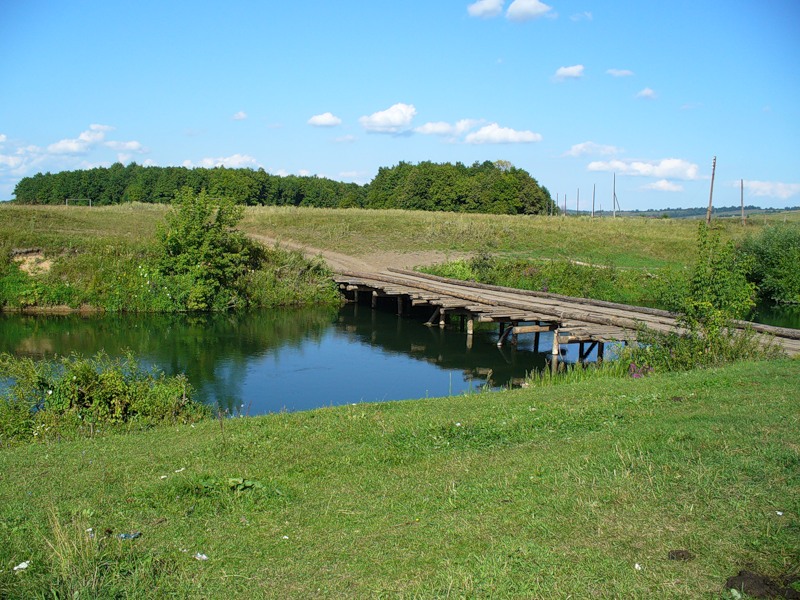
Battle of the Pyana, the Pyana Massacre, the Popyane Battle, the Massacre on the Pyana River — a battle between the Horde's army, led by Tsarevich Arab-Shah Muzaffar, and the combined Russian force, led by Prince Ivan Dmitrievich, on 2 August 1377 on the banks of the Nizhny Novgorod river Pyana River.
In the battle the Russian force was caught off guard and utterly routed. This allowed Arab-Shah to plunder the Nizhny Novgorod Principality and seize Ryazan.
The Tale of the Massacre on the Pyana River
The chronicle account of the massacre on the Pyana River belongs to the events of the late fourteenth century, a period when the Grand Principality of Moscow was intensifying its military resistance to the Horde. Moscow at this time was placing itself at the head of the other principalities of northeastern Rus, and the Grand Prince of Moscow was leading the Russian principalities in their struggle against the Golden Horde. This particular clash with the Horde's forces ended in defeat for the Russian detachments: the cause was the disorganization of the Russian commanders and the carelessness of the Russian warriors. The chronicle tale of the Battle of the Pyana has an accusatory character — the author exclaims with bitter sarcasm, playing on the name of the river: "Truly — beyond the Pyana, drunk!" (Poistinnye — za P'yanoyu p'yani!)
The text of the "Tale…" is published from the copy in the Simeonovskaya Chronicle of the first half of the sixteenth century — BAN, 16.8.25. Individual corrections of erroneous spellings have been made from the Rogozhsky Chronicler (RGB, f. 247 — collection of the Rogozhskoye Cemetery, no. 253).

|
Of the massacre on the Piana. In the year 6885. <...> In that same year a certain tsarevich by the name of Arapsha fled from the Blue Horde across the Volga, and he wished to march in war against Novgorod the Lower. Prince Dmitry Kostyantinovych[3] sent word to his son-in-law, Grand Prince Dmitry Ivanovich. And Grand Prince Dmitry gathered many warriors and came with a great force to Nizhny Novgorod.
And there was no news of Tsarevich Arapsha, and he turned back to Moscow. But he sent his own commanders against them, and with them the forces of Vladimir, Pereyaslavl, Yuryev, Murom, and Yaroslavl. And Prince Dmitry of Suzdal sent his son, Prince Ivan, and Prince Semyon Mikhaylovich, and with them commanders and many warriors. And the force was very great, and they marched beyond the river Piana, and news came to them, telling them that Tsarevich Arapsha was at Volchi Voda. And they grew careless and moved about negligently, loading their armor onto their carts,[7] and others into saddlebags, and some had their javelins[8] still unmounted, and their shields and spears were not made ready. And they rode with their garments slipping from their shoulders, their collars unfastened, as though overheated, for it was hot for them, the time being sultry. And wherever they came upon honey or ale during their foraging,[9] they drank to the point of drunkenness without measure and rode about drunk. Truly — beyond the Pyana, drunk! And their elders, their princes and senior boyars, grandees, or commanders — all of them rode off to hunt, making merry for themselves, as if they were at home. And at that time the pagan Mordovian princes secretly led a Tatar army from the Horde of Mamai against our princes. And the princes knew nothing of it, and no word had reached them. And they came to the Shipara, and suddenly the pagans swiftly divided into 5 regiments, and without warning struck our force from the rear, beating and stabbing and cutting them down unawares. And our men had no time to do anything at all, and fled toward the Pyana River, with the Tatars pursuing and striking them from behind. And there Prince Semyon Mikhaylovich was slain, and a multitude of boyars. And Prince Ivan Dmitrievich fled in a panic to the Pyana River, driven on furiously, and threw himself on his horse into the river and there was drowned, and with him a multitude of boyars and servants and people beyond number were drowned in the river. This evil deed came to pass on the second day of August, the feast of the holy martyr Stephen, on a Sunday, in the sixth hour of the day after midday. And the Tatars, having overcome the Christians, stood upon the bones of the slain, leaving all the captives and plunder there, and themselves set off toward Novgorod the Lower by a swift raid, unannounced. And Prince Dmitry Kostyantinovych had no strength to stand against them in battle, but fled to Suzdal. And the townspeople of Novgorod scattered in boats along the Volga toward Gorodets. And the Tatars came to Novgorod the Lower on the fifth day of August, on a Wednesday, the feast of the holy martyr Eusignius, on the eve of the Feast of the Savior, and slew the remaining townspeople, and burned the entire city and churches and monasteries, and thirty-two churches in the city were burned. And the pagans departed from the city on Friday, the foreigners making war upon the villages of Novgorod, burning hamlets and cutting down a multitude of people, and leading away women and children and maidens into captivity beyond counting. In that same year the aforesaid Tsarevich Arapsha came and plundered Zasurye and burned it with fire as well. In that same month of August, Prince Vasily Dmitrievich came from Suzdal to Novgorod the Lower, and sent men and commanded them to retrieve from the Pyana River the body of his brother, Prince Ivan. And they brought him to Novgorod, and they wept over him, and they laid him in the stone church of the Holy Savior, in the vestibule, on the right side, a week after the Feast of Our Lady, on that same day of the month of August, the twenty-third. |

|
Interesting Facts
- Three years after the great defeat of the Rurikids on the Pyana (1377), as a result of which they lost Nizhny Novgorod and Ryazan, word came of their victory at the Battle of Kulikovo (1380).
- The Battle of Kulikovo did not bring an end to the Mongol-Tatar yoke, which continued for another 100 years, until the "Stand on the Ugra River."
- Archaeological investigations of the presumed site of the Battle of Kulikovo have yielded no confirmation of a major engagement having taken place there.