
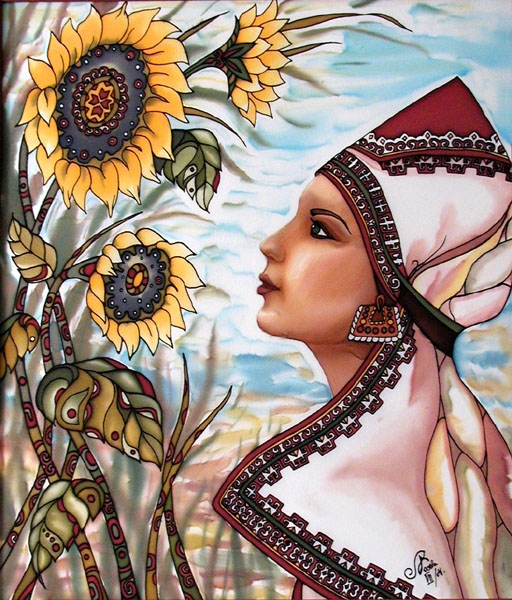
Erzya Cuisine — the preparation of food and the national table of the Erzya people.
Foods
The Erzya relied mainly on produce from their own households: bread, various baked goods made from unleavened and leavened dough with a variety of fillings. Fillings included potatoes, porridges, cabbage, onions, carrots, mushrooms, garden and wild fruits and berries, and on major feast days — meat and fish. The ancestors' favorite dishes were bliny (pancakes), homemade noodles, and shchi (cabbage soup). There were various kinds of shchi (kapstayam), soups (vetsayam), and fish soup. Before the arrival of potatoes, boiled turnip was widely eaten — a vegetable greatly loved by L. N. Tolstoy. From oats, peas, and rye they made kisel (a thick, starch-based drink). Oil (kansyuro lem) was extracted from hemp and flax seeds. The village had at least one, and sometimes more, oil press. Meat, milk, eggs, and fish also held an important place in the ancestors' diet.
Beverages
Pure
Among beverages, the most widespread was pure, prepared from granulated sugar or honey; it was brewed in our village as well.
The recipe was as follows: boiled water was poured into small oak barrels (30 liters in volume), granulated sugar, yeast, and hops were added, the stopper was driven in very tightly, and after 16 days, once fermentation had ended, it was carefully opened. The pure was ready.
Braga
Mordva braga (a traditional fermented drink) was considered an ancient beverage. The process of making braga was very complex and labor-intensive. It was prepared in large tubs and had an alcoholic content. As children, after skiing to our hearts' content, we would come home and, instead of shchi, loved to eat braga with black bread. It always had a foam on top in the tub. After a big celebration, the adult men would eagerly consume the thickest part of the braga (the yeast sediment), practically licking the walls of the tub. Among non-alcoholic drinks, kvass (poza) was widespread. Its preparation method is simpler.
Attitudes toward food, the methods of eating it, and the technology of preparing it varied and could be divided into three periods: before the christening of the Mordva, after it, and in modern times.
Rules of eating
During sacrificial "molyan" ceremonies, the best part of the meat was offered to the gods: "As soon as the animal breathes its last," wrote V. N. Mainov, "the leaders of the sacrifice cut out its tongue and loin and burn them on the spot beneath the sacred tree. The remaining meat is placed in cauldrons and boiled without any seasoning, then divided among all the participants of the molyan." The dish known as selyanka came to us from afar and is considered a national dish. At the "Natsional" restaurant in Saransk, this dish can always be ordered. The secrets of preparing selyanka have been preserved and enriched by Lyubayeva Galina Grigoryevna; when she prepares it, the entire neighborhood is filled with its magical aroma.
Some flour-based preparations were adopted by the Mordva after their conversion to Christianity. On March 9th, "skylarks" (bird-shaped pastries) were baked, and on the Wednesday of the fourth week after Lent — "crosses." For Ascension, flatbreads were made with crosswise stripes pressed into them, symbolizing a ladder. For Maslenitsa (Shrovetide), bliny were baked. As children, we would climb onto the roof of the house with these "skylarks," hold them up to the sun, and wait for the birds — the real skylarks — to appear from the south. The winter was so very long and tedious; we longed for spring to come sooner.
A special place at the "molyan" ceremonies was given to scrambled eggs. They were prepared at home, and women brought them to the cemetery. This tradition has survived to the present day. Eggs were considered a symbol of fertility.
Pure was a ritual beverage and was an obligatory component of the sacrificial food at "molyan" ceremonies. Sacred pure was made from a mixture of honey, hops, and barley, brewed in the same way as ordinary beer.
Traditional way of life and diet
The basic culinary principles of the Finno-Ugric peoples in general and the Mordva in particular — the selection of raw ingredients, the methods of culinary processing, and the composition of dishes — were in the past closely connected with religious beliefs, notions, and customs, with the specific conditions of their way of farming, and with their practice of fishing and hunting forest game and birds.
Finno-Ugric tribes settled along riverbanks, frequently moving their temporary camps, except for those that established themselves at convenient fishing spots. The upper reaches of rivers were generally not settled by Finno-Ugric tribes; the lower and middle courses were divided among different tribal groups of the same people, with one group occupying the basin of a major river along with all its tributaries. Distances of 300–500 km were therefore a routine journey for a hunter or fisherman, covered in summer by boat along the river current and in winter on skis over the frozen ice. A small and sparsely distributed population continuously controlled vast territories, developing them only through extensive use.
Relationship with nature
Right up to the 18th century, the Mordva — and Finno-Ugric peoples in general — had no firearms, and the fundamental rule of land use over millennia was the maintenance of nature's abundance: an extremely careful, conserving attitude toward it and the preservation of wildlife undisturbed. The upper reaches of rivers remained inviolable, sacred, and off-limits. In practice, along roughly a third of any river from its source, it was forbidden to fish, hunt game, fell trees, or even gather berries and mushrooms. In this way, over centuries, vast and impenetrable forested expanses were preserved in Zavolzhye and the Ural foothills.
Fishing during the spawning season or killing the young of forest game was considered by the pagan Finno-Ugric peoples to be the gravest of crimes. Violators, according to custom, were banished from the tribe or, more commonly, executed as a sacrifice to the gods.
Staple foods
The differences in dish names between the Moksha and Erzya are in most cases unrelated to any difference in preparation technique. The specific character of Mordva food in various areas of settlement was shaped by the natural and geographical conditions of those regions.
In terms of its raw ingredients, traditional Mordva cuisine, as part of the broader Finno-Ugric culinary tradition, is quite uncomplicated, wholesome, but nowadays relatively hard to source: red fish, roe, river fish, hare, elk; wild berries: lingonberries, wild strawberries, bilberries, cranberries, cloudberries, crowberries, bog-berries; mushrooms; game birds: capercaillie, black grouse, partridge, hazel grouse; honey and wild herbs.
The abundance of fish and game and the variety of their species is reflected in the distinctive features of Finno-Ugric cookery. Fish — kal (Moksha, Erzya) — was one of the primary food ingredients. Fish dishes differed not only in terms of how the fish was prepared — eaten raw, frozen, dried, sun-dried, fermented (pickled), salted, or boiled — but also in that different species of fish had different flavors and were prepared in different ways, by different methods. In addition, their offal could be used in various ways — liver, roe, milt, and fat. Hence the enormous variety of fish dishes.
For centuries, the selection of culinary ingredients was also influenced by the limited means of trapping forest game and birds. The main tools were snares and traps. The principal catches were therefore forest birds — capercaillie, black grouse, partridge — and among animals, hares. Large animals such as bear and even elk were practically unattainable before the advent of firearms. Bear and elk were therefore regarded as sacred animals, the masters of the taiga, and were long exempt from hunting. The national meat of the Mordva, the Mari, and the Permians was hare.
Under Russian religious rules before the 19th century, hare meat was considered unclean, so after the forced adoption of Christianity, Finno-Ugric peoples often prepared hare dishes "underground," and as a result the traditional techniques for cooking them were gradually lost.
Meat and poultry were braised, baked, and boiled. Traditional Finno-Ugric national cuisine has no fried dishes. Only the Mordva and the Mari borrowed some fried meat dishes from neighboring Tatars in the late 19th century, but the national cuisine is characterized by boiled or slow-cooked dishes — more precisely, slow-cooked meat and fish combined with separately prepared boiled or steamed (slow-cooked) vegetables (parenki).
Livestock meat
Beef, lamb, and pork were preserved for future use in several ways. One of the oldest methods was drying. Pre-boiled meat was dried in the oven or in the sun. Fat that rose to the surface during boiling was skimmed off and used as food. Other dishes were prepared using the resulting broth. Salting was also practiced. Without separating the meat from the bones, it was packed into tubs in pieces weighing between 1 and 1.5 kg and layered with salt. Pork fat was also salted for storage, and ham was smoked. Meat was likewise stored frozen.
Livestock products were mainly used to prepare ritual and festive dishes. Meat — sivol syvel (Moksha, Erzya) — was eaten in boiled form as a standalone dish relatively rarely. More often it was used as a filling for flour-based dishes.
Meat was also used to prepare soups (shongaryam, Moksha; yam, Erzya). It was also braised with potatoes and cabbage. Offal was mainly used as a filling for pies and pelmeni, though it was sometimes also used to prepare first-course dishes. Heads and trotters were used for kholodets (meat jelly). From a pig's head a dish called "golden beard" was prepared: the head was boiled, then dried in a pan in the oven; before being served, a dyed egg and a steamed birch twig with leaves were placed in its mouth, and a bundle of red-dyed threads was spread below the pig's head in the shape of a beard. This dish was prepared for Christmas and was also known among Russians of the Ryazan, Tambov, and Penza regions.
Internal fat was rendered or salted. It was used for frying and added to first-course dishes.
Chicken eggs — al (Moksha, Erzya) — held a significant place in the traditional Mordva diet. They were most often eaten hard-boiled, added to food as a seasoning, and used to make scrambled eggs. Scrambled eggs were given a special place at molyan ceremonies. They were prepared at home or directly at the molyan site on large griddles and were called "communal." Eggs were considered a symbol of fertility.
The intestines of domestic animals were widely used. After cleaning and washing, they were either simply boiled in a pot or stuffed with millet porridge mixed with fat and fried onions, then slow-cooked in lard. Animal blood was fried or used as a filling in the preparation of homemade sausage.
Among the Mordva-Moksha, a wedding or the birth of a child called for the preparation of fried meat with onions — shyanapt. As a festive and wedding dish, the Erzya ate an equivalent preparation — selyanka (fried meat and offal with seasoning). Horse meat also featured in the ritual food of the ancient Mordva, but with the adoption of Christianity it almost entirely fell out of use, surviving only at a special molyan dedicated to horses.
Plant-based foods
Oil — kantsyorvay (Moksha), kantsyoroy (Erzya) — was extracted from hemp seeds. It was used in the preparation of a great many dishes.
Many households grew cabbage, cucumbers, potatoes, garlic, carrots, beets, turnips, radishes, and pumpkins. In summer and autumn, most vegetables were eaten fresh. For winter, cabbage was fermented in large tubs and usually lasted until the new harvest. Cucumber brine was used with many dishes. Beet and pumpkin were eaten steamed and often substituted for sugar. Carrots were usually given to children raw. Shchi — kapsta lyam (Moksha) — was cooked from potatoes, cabbage, and sorrel. Soups — shongaryam (Moksha), vetsayam (Erzya) — were prepared from millet with a small amount of potato.
Until the 19th century, turnip occupied an important place in the diet; it was eaten boiled as well. From the second half of the 19th century, potato — modamar (Moksha, Erzya) — became a significant part of the Mordva diet. It was usually boiled in its skin and then peeled. It was then mashed with the addition of butter, milk, or cream. Sometimes mashed or sliced potato was fried or braised in the oven. It was eaten with brine, cucumbers, cabbage, and mushrooms. Noodles were made from potato starch.
Mushrooms
Mushrooms are also an essential element of the national diet. They are generally boiled, less often fried, but most preferably salted, fermented, or dried.
The use of grain and porridge made from it occupies a special place in Finno-Ugric cookery. The Mordva and the Mari, closely connected with the peoples of the Lower Volga region, favor millet, although pearl barley, spelt, and rye (black porridge) were also long considered the principal raw materials for kashitsa — heavily overcooked porridges diluted with water, oil, or hot milk, with the addition of wild herbs and onions.
Ritually significant dishes, closely associated with specific moments of the agricultural cycle as well as with family and communal religious celebrations, held a place of special honor in Mordva food.
In particular, millet porridge was not only a refined dish at weddings, christenings, and memorial meals, but was also associated with a special molyan — baban kasha ("women's porridge"). In the Erzya wedding, the last day the bride spent in her parents' home was called kashado yarsamo chi (the day of porridge), which marked the beginning of the wedding. By tradition, when the central beam of a new house was laid, the owner walked around the log frame carrying millet porridge, which symbolized longevity. At christenings, a milky millet porridge was cooked; like eggs, it was considered a symbol of fertility. Each guest at the christening, upon tasting it, congratulated the parents on the new addition to the family and wished the newborn as many years of life as there were grains of porridge in the pot.
From the grain of the new harvest, the Moksha cooked a porridge called pocham. The grain was ground, dropped into boiling water, and cooked in a pot to the desired consistency, then seasoned with hemp oil and served. Closely related in preparation technique was kulaga (Moksha, Erzya), made from malt that was fermented and slow-cooked in the oven.
Another distinctive use of grain is the stuffing of pork intestines with firm porridges (primarily millet) and frying them in lard.
Similar in their raw ingredients to porridges and thin gruels are flour-based kisel dishes — oat, pea, and rye. To prepare oat kisel, toasted oat flour (tolkono) was mixed with water, left to settle, then strained and boiled with salt. Pea kisel was seasoned with vegetable oil, producing a dish resembling a thick soup. Later, with the spread of potatoes, starch-based kisel made with milk and water came into use.
Pancakes and flour
In the 15th–17th centuries, as contacts with Russians and Tatars expanded, Finno-Ugric peoples became acquainted with wheat flour. However, until the 18th century flour was imported rather than locally produced, meaning it was used sparingly, which prompted the creation of distinctive meat-and-dough dishes in which the dough portion was carefully measured so as not to exceed the meat portion. In Mordva cuisine, for instance, small pieces of lard are wrapped in dough, and the resulting "dumplings" are boiled and then fried to produce a characteristically national dish called tsyomart.
The Mordva's favorite dish is bliny (pancakes) — pachat (Moksha), pachalksyet (Erzya) — made from rye, wheat, millet, or pea flour. They were usually made very thick and eaten with milk, butter, or honey. To make the bliny soft and fluffy, starch or mashed boiled potatoes were added to the batter. In the early 20th century they were supplanted by thin pancakes made from unleavened dough.
Some ritual flour-based preparations were adopted by the Mordva after their conversion to Christianity. In March, "skylarks" were baked; on the Wednesday of the fourth week of Lent, "crosses" were baked, into which coins, small crosses, lumps of charcoal, and grains were inserted. For Ascension, flatbreads were made with crosswise stripes pressed into them, symbolizing ladders. For Maslenitsa, bliny were baked.
Noodles held an important place among traditional dishes. They were made with water or milk from rye, and later from wheat flour, or from starch mixed with flour. The liquid batter was poured onto a hot pan and placed in the oven; the resulting thin, baked pancake was then cut into small strips.
The Mordva-Moksha prepared navseymat (makalki) from sour, stiffly kneaded dough: the dough was rolled into a long strip, small pieces were pinched off, dipped in hemp oil, placed in a pot, and cooked in the oven. From unleavened dough they made salmat (Moksha, Erzya): small pieces of dough were rolled into balls and dropped into boiling water.
Milk
Milk — loftsa (Moksha), lovso (Erzya) — held an important place in the Mordva diet. It was used to make cheese, butter, and cottage cheese. Most widely, however, it was used to prepare sour milk: shapama loftsa (Moksha), chapamo lovso (Erzya). In poorer households this was usually made from skimmed, boiled, or baked milk, which was cooled to the temperature of fresh milk and mixed with a starter culture — old curdled milk. The milk was left in a warm place until it thickened, then moved to a cellar. Sour milk was eaten with bread, potatoes, and porridge, and served alongside pancakes.
A drink called iryan was made from sour milk with the addition of salt. For longer storage, sour milk was pressed into a solid mass called koltsyagat. This could also be diluted with water or milk, in which case the drink was called suzma. From milk they also made cottage cheese (topo, Moksha and Erzya), butter (vay, Moksha; oy, Erzya), and in some areas the Samara Mordva made a cheese called krut.
The Mordva prepared cheese in two ways. In the first, the cheese was made firm and hard: sour milk was poured into a linen sleeve and then pressed under a weight. In the second, the cheese was churned in clay pots and topped with cow's butter to keep it always soft.
From the first milking after calving, the Moksha Mordva made a variety of cheese called michke. The firm, solidified mass that resulted from cooking had a salty flavor; it was cut into pieces and eaten with bread.
To make butter, sour cream was warmed in the oven, the whey was drained off, and the butter was churned in an open or closed vessel (a churn). The buttermilk remaining after the butter was separated — pikhtem loftsa (Moksha), pivtez lovtso (Erzya) — was eaten with potatoes or drunk as a beverage.
Horticulture was poorly developed, so sweet foods were relatively modest — the diet relied mainly on wild plants: guelder rose, bird cherry, berries, and sorrel. These were eaten fresh, dried, or used as pie fillings. Among traditional confectionery one can mention pies filled with grated dried bird cherry, fresh guelder rose (chevchelen-pryakat), and pies with sorrel lightly sweetened with sugar or honey.
Honey and Brag
Honey was used extensively (sugar was virtually unknown before the revolution). Among the Mordva (and the Mari), honey formed the basis of traditional ceremonial and festive dishes. It was also used as a medicine. Various drinks were made from bee-keeping products: honey brag, and the most ancient drink — an alcoholic brew called pure (the exact recipe for which has been lost in our time). Pure was a ceremonial drink and was an obligatory part of the sacrificial food at molyany (communal prayer gatherings). Sacred pure was made from a mixture of honey, hops, and barley.
Poza
The only version that has survived to the present day is brag made from beetroot — poza, which has become a national drink. It is connected with the gathering of wild hops. This ingredient largely accounts for the distinctiveness of the folk beverage, which is associated with vitality and good health.
It was not without reason that people raising a cup of poza would exclaim: "Drink Mordovian poza — and gain your health!" This happened before every major holiday. And if the housewife was not lazy, poza was drunk on ordinary days as well. As long as there was sugar beet, any woman — until quite recently — could prepare pozanyu, as the Moksha people affectionately call the brag (recipe). Poza not only quenches thirst but is filling too. As they say of it: drink a lot — eat a little! It is also beneficial in that it does not intoxicate but does cheer. "Drink poza — and you'll be half all right; drink vodka — and you'll be lost altogether" — so goes the Mordovian proverb. Poza was always held in honor, in joy — at a wedding — and in sorrow — at a wake.
Among the Moksha Mordva there was a custom called avan poza (women's brag), observed in spring, a week after Easter. Women from about thirty households would gather in one large house, bringing eggs, bread, pancakes, and flour for making brag, and would brew the drink together. When it was ready, a communal feast began, during which wishes were expressed for a good grain harvest. The celebration ended with the ceremonial carrying of a jug of brag from the house where it had been prepared to the house where the ritual would be repeated the following year.
Among non-alcoholic drinks, kvass was widely consumed. Diluted sour milk and buttermilk were also frequently drunk.
Tea came into common use in Mordovian villages relatively recently. Blackcurrant leaves, linden blossom, oregano, and other herbs were also brewed.
Many ceremonial dishes were prepared for weddings. Especially noteworthy is the largest and most important pie, the luksh, baked by the groom's mother and sent as a gift to the bride's relatives together with the wedding party that went to fetch the bride. It was baked from sour rye dough or wheat flour with a filling of 7 to 12 layers: the bottom layer of millet porridge, then cottage cheese, with special layers of boiled chicken, hen's eggs or fried eggs, and so on. The top of the pie was invariably decorated with figures of birds, little stars, apple sprigs, and colored threads, ribbons, and beads, all baked from unleavened dough.
Among other wedding baked goods, mention must be made of special pies called "the young bride's breasts," filled with cottage cheese, which accompanied a particular prayer in the groom's house, during which the supreme god Nishke was asked that the young bride have an abundance of milk and that she give birth to seven sons and as many daughters.
Bread
Bread (kshi, Moksha and Erzya) was baked mainly from rye and wheat flour, less often from barley and oat flour. It was made from leavened sourdough dough. The dough was placed in molds or simply laid on cabbage or other leaves. For holidays, flatbreads were made from enriched dough kneaded with sour cream, butter, and eggs (kopsha, Moksha; syukorot, Erzya). In addition, pies were baked with a variety of fillings (peryakat, Moksha; pryakat, Erzya): vegetable, meat, berry, porridge, potato, and so on.
A "bread of health" was taken by matchmakers and placed on the table in the bride's home at the start of the betrothal ceremony; it was also placed at the bottom of a large hollowed-out tub (parya) containing the bride's belongings (dowry) before she was sent to the groom's house.
Everyday Eating Habits
The everyday diet of the peasantry in the past was monotonous and meager, especially during the frequent fasting periods. Only on Sundays and major holidays did people try to add variety: they made pancakes, pies, and dumplings (though dumplings were prepared extremely rarely and can be considered a seasonal dish — fillings for them included porridge, potato, and cabbage; in the Saratov Governorate, dumplings consisted of pieces of unleavened dough with cabbage, boiled in water with a small amount of flour added), and made fried eggs. Meals were taken three times a day. Breakfast was not much smaller in size than dinner. Soup or noodle soup and potatoes, kisel, or salma were usually cooked for breakfast. Dinner consisted of shchi or soup, porridge, and often potatoes as well. For supper, leftover dishes from dinner were reheated or potatoes were cooked.
Food for the entire day was prepared in the morning in the oven, which was heated only once. The mother-in-law did the cooking, and in large families the other women helped her. It was the duty of the daughters-in-law to keep the kitchen supplied with firewood and water. The Mordva did not practice the separate eating by men and women that existed among many peoples. Meals were usually taken by the whole family together at a shared table.
Interesting Facts
- The Mordva became acquainted with tomatoes rather late. This crop was borrowed from the Russians along with its name.
- Among vegetables, radish and turnip can be considered native to the Finno-Ugric peoples; among herbs and flavorings — watercress, horseradish, scurvy grass, onion, sarana (a wild lily), hogweed, field horsetail (the Perm subspecies), nettles, and young ground elder.
- Typical of Finno-Ugric cuisine — and practically absent from other national cuisines — is the combination in a single dish of meat and fish, or even meat, fish, and poultry. The mere sight of this stew (which has a murky, unappealing dirty gray-green-brown color) horrified European travelers. The Sura Erzya Mordva use poultry and fish in the same soup, and to this day, on exceptionally solemn occasions, prepare sterlet shurba in chicken broth. Such food combinations, despite their unusual and unattractive appearance, have an exceptionally fine flavor, and for this reason the original cuisine of the Finno-Ugric peoples deserves attention. (The Great Encyclopedia of Culinary Art. All recipes by V. V. Pokhlyobkin (archive) )
- Brag "poza" made from beetroot not only quenches thirst but is filling too. As they say of it: drink a lot — eat a little! It is also beneficial in that it does not intoxicate but does cheer. "Drink poza — and you'll be half all right; drink vodka — and you'll be lost altogether" — so goes the Mordovian proverb.